



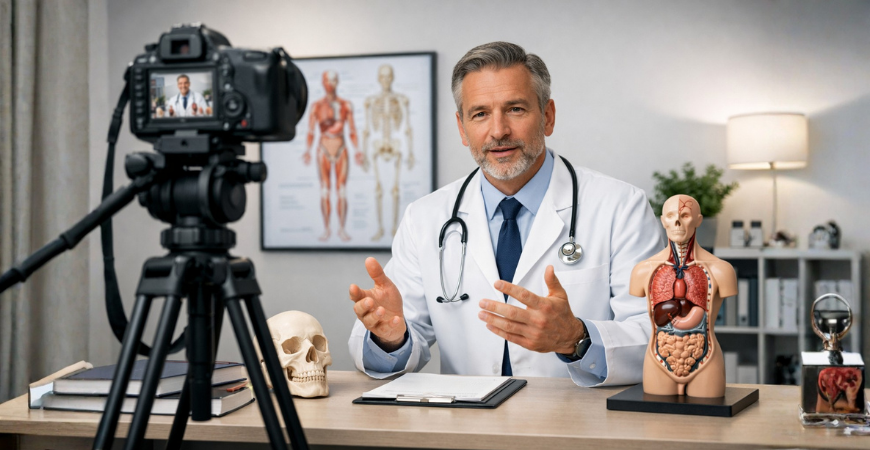
Medical Education & Academic Contribution
Medicine is not just a profession—it is a continuous journey of learning, teaching, and evolving. In an era where healthcare knowledge expands rapidly, the role of structured medical education and meaningful academic contribution has become more critical than ever. Medical Education & Academic Contribution is designed to empower healthcare professionals with the knowledge, skills, and intellectual foundation needed to thrive in modern clinical environments.
Guided by Dr. Kushal Narula, an experienced Emergency Physician and Assistant Professor, this service blends academic rigor with real-world clinical expertise. It creates a dynamic platform where learning is not limited to textbooks but enriched by experience, innovation, and evidence-based practices.
Why Medical Education Matters in Today’s Healthcare Landscape
Healthcare is evolving at an unprecedented pace. New treatment protocols, emerging diseases, and technological advancements demand that professionals stay updated and adaptable. Medical education is no longer confined to classrooms—it is an ongoing process that directly impacts patient outcomes.
Medical Education & Academic Contribution ensures that:
- Healthcare professionals remain aligned with the latest clinical guidelines
- Learning is practical, relevant, and applicable in real-world settings
- Academic growth complements clinical expertise
- Knowledge is shared, expanded, and continuously refined
Dr. Kushal Narula emphasizes, “Education in medicine is not about memorizing facts—it’s about understanding, applying, and advancing them.”
A Modern Approach to Medical Learning
This service redefines traditional medical education by integrating innovative teaching methods with clinical relevance.
Evidence-Based Learning
Participants are exposed to the latest research, guidelines, and clinical protocols. This ensures that every decision made in practice is backed by scientific evidence.
Case-Oriented Teaching
Real-life clinical cases form the backbone of learning. These scenarios help participants understand disease progression, diagnostic reasoning, and treatment strategies in a practical context.
Interactive Academic Sessions
Rather than passive lectures, sessions are designed to be interactive and engaging. Discussions, debates, and problem-solving exercises encourage active participation and deeper understanding.
Core Areas of Academic Contribution
Medical Education & Academic Contribution by Dr. Kushal Narula covers a comprehensive range of topics that are essential for both academic and clinical excellence.
Clinical Teaching and Mentorship
Guiding medical students, interns, and residents through structured learning pathways. Emphasis is placed on building strong clinical foundations and critical thinking skills.
Research and Evidence Integration
Understanding how to interpret medical research and apply it in clinical practice. Participants learn the importance of evidence-based medicine in improving patient outcomes.
Curriculum Development
Designing educational content that is relevant, updated, and aligned with current healthcare needs. This ensures that learning remains practical and future-focused.
Skill-Based Training
Hands-on training sessions that focus on essential clinical skills, bridging the gap between theory and practice.
Academic Writing and Presentation
Enhancing the ability to present medical knowledge effectively through research papers, presentations, and academic discussions.
Bridging the Gap Between Academia and Clinical Practice
One of the biggest challenges in medical education is translating theoretical knowledge into clinical competence. This service addresses that gap by integrating:
- Classroom learning with bedside application
- Academic knowledge with real-world case insights
- Structured teaching with practical exposure
As an Assistant Professor, Dr. Kushal Narula brings academic depth and structured teaching methodologies. As an Emergency Physician, he contributes real-time clinical insights that make learning relevant and impactful.
Who Can Benefit?
Medical Education & Academic Contribution is designed for a wide spectrum of learners and professionals.
- Medical students seeking strong academic foundations
- Interns and residents preparing for clinical responsibilities
- Practicing doctors aiming to update their knowledge
- Nursing professionals enhancing their clinical understanding
- Academicians looking to contribute to medical education
Whether you are beginning your journey or advancing your career, this service provides the tools to excel.
Building a Culture of Continuous Learning
In medicine, learning never stops. This service promotes a culture where curiosity, inquiry, and knowledge-sharing are encouraged.
Participants are trained to:
- Stay updated with emerging medical trends
- Engage in lifelong learning
- Share knowledge within professional communities
- Contribute to the advancement of healthcare education
Dr. Kushal Narula believes that “a great clinician is also a lifelong learner and an effective teacher.”
Innovative Learning Methods
To enhance engagement and retention, this program incorporates modern educational techniques.
Visual and Conceptual Frameworks
Complex medical topics are simplified using diagrams, flowcharts, and structured models, making them easier to understand and remember.
Simulation-Based Learning
Practical simulations replicate real clinical scenarios, helping participants develop confidence and competence.
Continuous Feedback and Assessment
Regular evaluations ensure that learners can track their progress and improve consistently.
Academic Contribution Beyond the Classroom
This service extends beyond teaching—it focuses on contributing to the broader medical community.
- Encouraging research and publication
- Promoting evidence-based discussions
- Sharing clinical insights and experiences
- Supporting the development of future healthcare leaders
By fostering academic contribution, this program helps shape not just individual careers but the future of healthcare itself.
What Sets This Service Apart
- Expert-led training by an experienced emergency physician and academician
- Integration of latest medical research and clinical practice
- Focus on both education and contribution
- Interactive, engaging, and practical learning environment
- Commitment to continuous improvement and innovation